
Monday, April 23, 2018
I'VE MOVED!
My blog site, still called "Field Notes," is now part of my brand-new website lindabuckmaster.com. Everything new will be posted there, but you can still read my older posts here. I will also be posting my Audio Essays on the website under the Media tab, and events, news, and upcoming classes will be there as well. And, you can learn about my hybrid memoir that will be published in November 2018 by Burrow Press, Space Heart. A Memoir in Stages. Hope to see you there!


Monday, April 2, 2018
"Stonework"
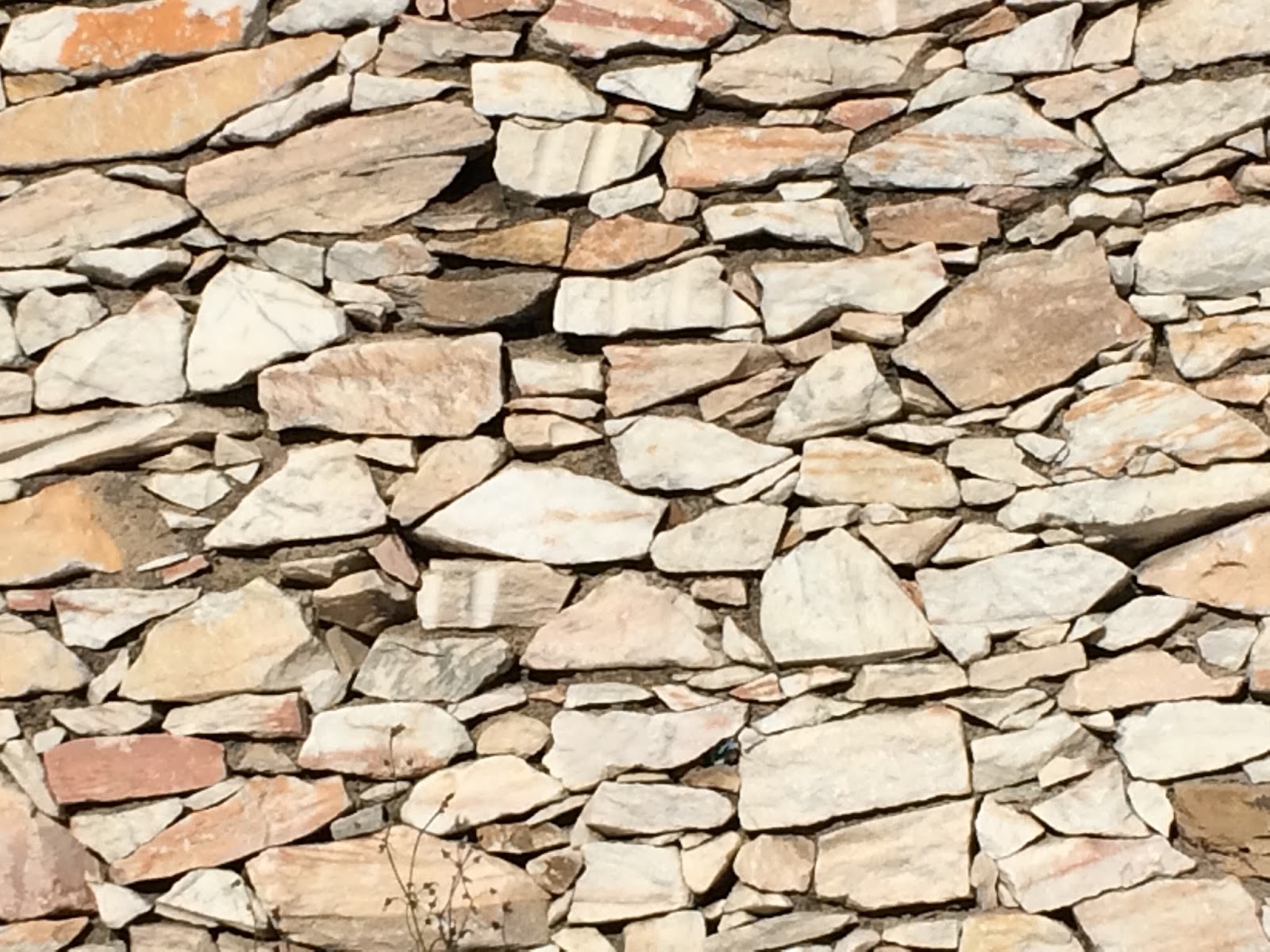
(Local marble in a road embankment, Evoramonte, Portugal)
Stonework
(After Dudley Zopp’s “Geologics”)
I.
It’s much
quieter now. Boulders lie peacefully. A gentle wash of slate litters the
hillside. Tree roots caress granite outcrops like old lovers, while igneous and
metamorphic sleep together in erratic lineage, allowing lichen decades to creep
across their backs. Lumpy ridges, glacial till dotted with ponds and marshes,
eroded roots of volcanic chains -- permeable or impermeable, but all waiting for
exactly nothing.
II.
Dappled across
each individual stone, and together spread out in pattern, speckled tableau, three
shades of gray, maybe a pink, some brown or tan—dappled memory.
III.
Throw them
farther, farther, each satisfying plunk or plink its own music, song of boys and
the bored, the nervous conversation, the rocky frustration. Throw another stone,
a composition complete and pleasing.
IV.
What
stories laid here, this northern wall fitted to keep out or in some something,
or maybe just to get the damn things out of the way, or maybe no stories at
all, only the stony work of hard silence.
V.
Go deep enough, you run into a stone.
VI.
We didn’t
have stones there. Florida sand, coral reef, coquina rock, limestone not too
far beneath the surface: porous, all porous. Something was missing.
VII.
So basic. So useful. So often in the
way.
VIII.
Every spring a new crop, winter gifts,
glacial rubble, tumble and heave.

Sunday, March 25, 2018
Writing Poetry on a Maine Island

Poetry on a Maine Island:
A Writing Workshop
July 26-29 (three nights)
Registration by May 15
Registration by May 15
There is nothing like an island
for writing. Come to Whitehead Island located on Muscle Ridge Channel at the
entrance to Penobscot Bay to experience a classic Maine island and Lightkeepers
house with time to explore, write, and relax. Maine islands have a long
tradition of inspiring poets of all kinds and Whitehead is a special place for
inspiration.
Travel
by private boat from Spruce Head, eight miles south of Rockland. Stay
in the renovated Lightkeepers house and enjoy wonderful meals. Explore
the deep spruce woods and the granite outcroppings down to the sea.
· Open to
any poets and aspiring poets of any level who will write new poetry, experiment
with form and style, and revise existing work if they have it. Small class size
of 7 to 14 participants.
·
We will
discuss readings on craft and the work of other poets for inspiration.
We will hear about the history of the island and the mainland towns.
· We will
write in plein air among the nooks and crannies of the island and in
cozy spots in the Lightkeepers House.
· Other
activities include a guided walk of the island led by Whitehead Island staff,
boat ride of local waters, and lobster bake.
Linda’s classes maintain a safe,
supportive environment that recognizes there is no such thing as a mistake in
writing, just the next draft. For more info and to register, contact
http://www.whiteheadlightstation.org/2018-writing-workshop.html

Location
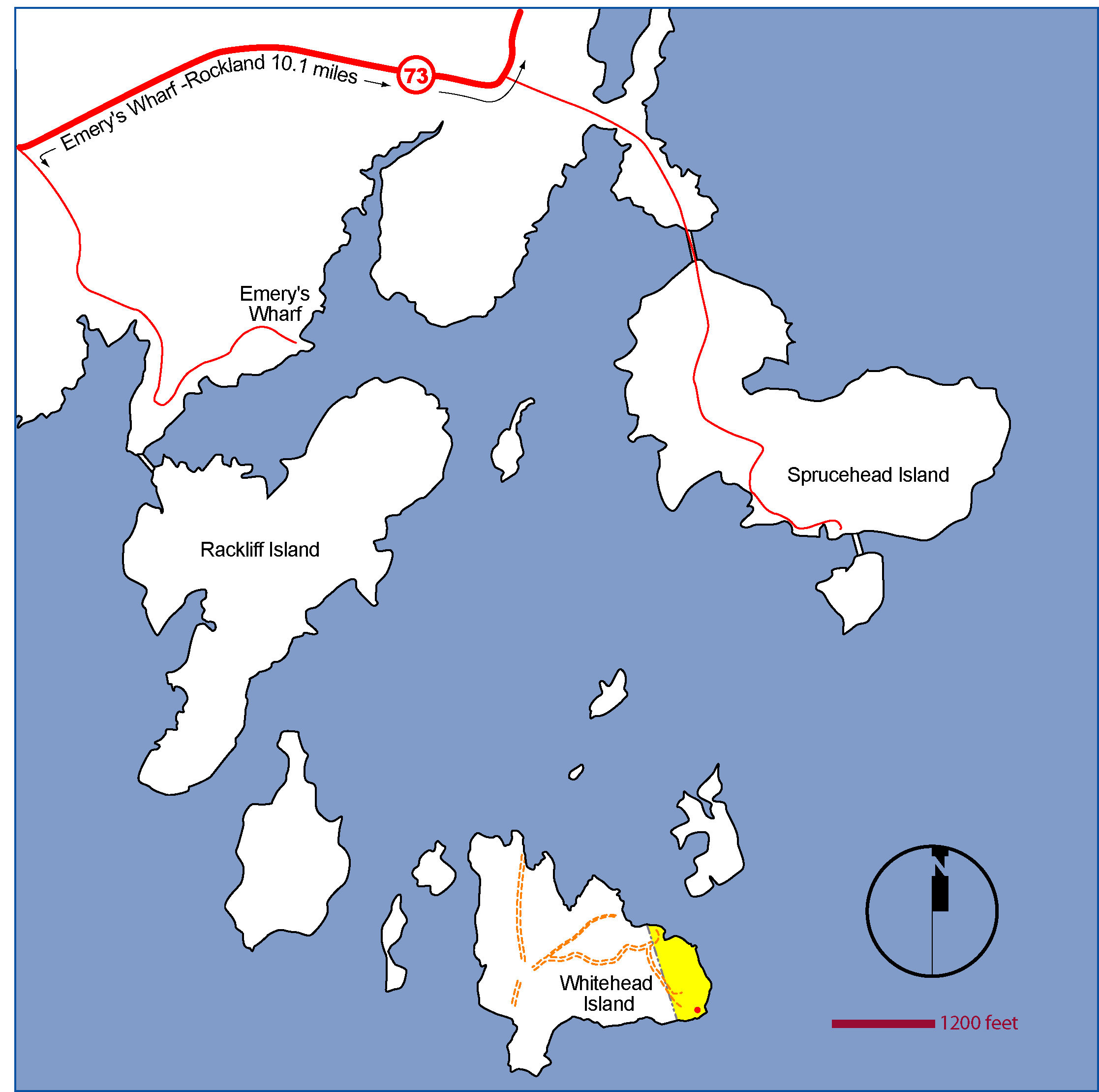
Whitehead Light Station is located on Whitehead Island, which is about 8 miles southwest of Rockland, Maine, about 3 miles northeast of Tenant’s Harbor and directly off the coast from Spruce Head. The Emery's Wharf parking and embarkation point is about a two-hour drive from Portland, Maine and just over four hours from Boston. It is about 45 minutes south of Camden and 15 minutes from Rockland and the Owl’s Head airport. Detailed driving directions are sent with acknowledgement of program registration.
Click on the maps below to enlarge:
Friday, March 23, 2018
Audio Essay Collection
The Audio Essay Collection so far. Per requests, I am posting all the links to my audio essays that I've done so far. On my new website, which should be ready soon, they will be housed in their own section. All were recorded for the program "Esoterica" on the community radio station WERU in Orland, Maine. All are under 5 minutes. Thanks for the interest!
"Radio Waves" 3/20/18
https://archives.weru.org/esoterica/2018/03/esoterica-112117-2-2-2-2-2-2-2-2-2-2-2-2-2-2/
"Rough Fabric" 2/13/18
https://archives.weru.org/esoterica/2018/02/esoterica-112117-2-2-2-2-2-2-2-2-2/
"My Husband's Being Deployed on Tuesday" 1/2/18
https://archives.weru.org/esoterica/2018/01/esoterica-112117-2-2-2-2-2/
"Wise Women" 12/5/17
https://archives.weru.org/esoterica/2017/12/esoterica-112117-2/
"Bus to Dolores Hildalgo" 11/7/17
https://archives.weru.org/esoterica/2017/11/esoterica-11717/
"Radio Waves" 3/20/18
https://archives.weru.org/esoterica/2018/03/esoterica-112117-2-2-2-2-2-2-2-2-2-2-2-2-2-2/
"Rough Fabric" 2/13/18
https://archives.weru.org/esoterica/2018/02/esoterica-112117-2-2-2-2-2-2-2-2-2/
"My Husband's Being Deployed on Tuesday" 1/2/18
https://archives.weru.org/esoterica/2018/01/esoterica-112117-2-2-2-2-2/
"Wise Women" 12/5/17
https://archives.weru.org/esoterica/2017/12/esoterica-112117-2/
"Bus to Dolores Hildalgo" 11/7/17
https://archives.weru.org/esoterica/2017/11/esoterica-11717/
Thursday, March 22, 2018
Audio Essay -- "Radio Waves"
"Radio Waves"

This is an excerpt from my forthcoming book, Space Heart. A Memoir in Stages. It was originally broadcast on community radio station WERU. By the way, the photo above is from the Saguaro National Forest outside of Tuscon.
Sunday, March 11, 2018
The cover mockup for my hybrid memoir
Space Heart. A Memoir in Stages
Photomontage artist Joan Proudman did the cover art http://joan-proudman.squarespace.com. The launch will be November 2, first in my town of Belfast, Maine, then on to Florida, home of my publisher Burrow Press https://burrowpress.com --- and beyond.

It’s 1962, one year after
Alan B. Shepherd became the first American in outer space. This year, John
Glenn orbits the earth three times, the first communications satellite,
Telstar, is launched, and sea turtles once again come ashore as they have for
millennia to lay their eggs on wild Florida beaches just miles from Cape
Canaveral. In the spirit of the go-go time and place, eleven-year-old Linda
Buckmaster becomes one of the first children to successfully undergo open-heart
surgery using the recently perfected heart-lung machine.
In this hybrid memoir,
Linda weaves into her story as the daughter of a rocket engineer the
juxtaposition between cutting-edge technology and the natural world on the
empty barrier island that came to be called the Space Coast. That contrast is
written on her own small body as surgeons work to correct a congenital heart
defect. Encountering more of a problem than they or Linda’s parents
anticipated, they improvise a solution using materials developed for the space
industry.
Alternately lyrical and
narrative, the book moves forward to later years when Linda begins to reflect
on the events of those times and the meaning of her experience.
Saturday, February 17, 2018
Audio Essay: "Rough Fabric"
First broadcast on WERU on February 13, 2018. Click the small MP3 button to hear it.
https://archives.weru.org/esoterica/2018/02/esoterica-112117-2-2-2-2-2-2-2-2-2/

https://archives.weru.org/esoterica/2018/02/esoterica-112117-2-2-2-2-2-2-2-2-2/

Thursday, February 1, 2018
Poetry on a Maine Island

Poetry on a
Maine Island:
A Writing Workshop
July 26-29 (three nights)
Registration by May 15
Registration by May 15
There is nothing like an island
for writing. Come to Whitehead Island located on Muscle Ridge Channel at the
entrance to Penobscot Bay to experience a classic Maine island and Lightkeepers
house with time to explore, write, and relax. Maine islands have a long
tradition of inspiring poets of all kinds and Whitehead is a special place for
inspiration.
Travel by private boat from Spruce Head, eight miles south of Rockland. Stay in the renovated Lightkeepers house and enjoy wonderful meals. Explore the deep spruce woods and the granite outcroppings down to the sea.
· Open to
any poets and aspiring poets of any level who will write new poetry, experiment
with form and style, and revise existing work if they have it. Small class size
of 7 to 14 participants.
· We will
discuss readings on craft and the work of other poets for inspiration. We will hear about the history of the island and the mainland towns.
· We will
write in plein air among the nooks and crannies of the island and in
cozy spots in the Lightkeepers House.
· Other
activities include a guided walk of the island led by Whitehead Island staff,
boat ride of local waters, and lobster bake.
Linda’s classes maintain a safe,
supportive environment that recognizes there is no such thing as a mistake in
writing, just the next draft. For more info and to register, contact
Saturday, January 13, 2018
Audio Essay: "My Husband's Being Deployed on Tuesday" plus more
"My Husband's Being Deployed on Tuesday"
I've taught in the University of Maine System for 25 years, both live classes and on-line ones. This audio flash essay was broadcast on the show "Esoterica" by community radio station WERU. It was inspired by an e-mail sent to me by one of my students. You will need to click the tiny MP3 button under the title.
https://archives.weru.org/esoterica/2018/01/esoterica-112117-2-2-2-2-2/
"Security Clearance"
In other news, I forgot all about this: My essay, "Security Clearance," is coming out in an anthology about Florida to be published by the University of Florida Press this March! It was so long ago that I was first approached by the editor Jim Ross about including my piece in "In Season: Stories of Discovery, Loss, Home and Places in Between." You can pre-order it through Amazon, but, of course, I prefer you ask your local independent bookstore to get it for you. https://www.amazon.com/Season-
If you'd like to read the entire essay first published in Burrow Press you can see it here: http://burrowpress.com/security-clearance-linda-buckmaster/. And here's the opening line:


I've taught in the University of Maine System for 25 years, both live classes and on-line ones. This audio flash essay was broadcast on the show "Esoterica" by community radio station WERU. It was inspired by an e-mail sent to me by one of my students. You will need to click the tiny MP3 button under the title.
https://archives.weru.org/esoterica/2018/01/esoterica-112117-2-2-2-2-2/
"Security Clearance"
In other news, I forgot all about this: My essay, "Security Clearance," is coming out in an anthology about Florida to be published by the University of Florida Press this March! It was so long ago that I was first approached by the editor Jim Ross about including my piece in "In Season: Stories of Discovery, Loss, Home and Places in Between." You can pre-order it through Amazon, but, of course, I prefer you ask your local independent bookstore to get it for you. https://www.amazon.com/Season-
If you'd like to read the entire essay first published in Burrow Press you can see it here: http://burrowpress.com/security-clearance-linda-buckmaster/. And here's the opening line:
“Wait here.
I have to put my knives in the car to get through Security,” my brother Ric
says.

"Flowering"
And last, but certainly not least, my little poem "Flowering" was read this week on Maine Public Radio by Maine Poet Laureate Stuart Kestenbaum https://mainearts.maine.gov/Pages/Programs/Maine-Poet-Laureate. You can hear it at mainepublic.org under "Poems From Here." This poem has had a life of its own and has been around the block a few times. Now, if it would only send home money . . .

Monday, January 1, 2018
A Poem for the New Year
Return
Where the Passy meets the
Bay, we come together,
gathering like ducks at
Solstice:
Barrow’s Goldeneyes down
from Hudson’s Bay,
here once again in sight
of the old bridge,
bobbing and drifting, each small bird complete
but always swimming near to
one another.
We, too, drift in this
bright stream,
floating a life, returning
to light.
Note: The Passy is the
local nickname for the Passagassawekeag River that empties into
Penobscot Bay
at Belfast, Maine. It's 4:22 pm, and I think it is a bit lighter this time of day than it was two weeks ago.
Saturday, December 9, 2017
Audio Essay: "Wise Women"

This essay is from a trip last year to Newfoundland. Although the events of the essay take place on the Northern Peninsula near the Viking settlement of L'Anse aux Meadows, the photo above is on the East Coast trail of the Avalon Peninsula.
The essay was originally broadcast on radio show "Esoterica" on station WERU on December 5, 2017. Click on the tiny gray MP3 box under the title. https://archives.weru.org/esoterica/2017/12/esoterica-112117-2/
Tuesday, December 5, 2017
Audio Essay: "Bus to Dolores Hildalgo"

This little piece is from a 9-week trip to central and southern Mexico about a decade ago. The audio version was first broadcast on the program "Esoterica" on our community radio station WERU weru.org.
http://archives.weru.org/esoterica/2017/11/esoterica-11717/
Click on the tiny gray MP3 box under the title.
Sunday, December 3, 2017
"Fallout" Nominated for Pushcart Award
I just got notice that my essay, "Fallout," has been nominated for a Pushcart Prize by Saw Palm, the literary magazine that originally published it. It is also included in my hybrid memoir, Space Heart. A Memoir in Stages, forthcoming from Burrow Press in Fall 2018 https://burrowpress.com/about/. We'll see if the essay makes the final cut into the annual Pushcart anthology.

"The Pushcart Prize: Best of the Small Presses series, published every year since 1976, is the most honored literary project in America.
"Since 1976, hundreds of presses and thousands of writers of short stories, poetry and essays have been represented in our annual collections. Each year most of the writers and many of the presses are new to the series. Every volume contains an index of past selections, plus lists of outstanding presses with addresses.
"The Pushcart Prize has been a labor of love and independent spirits since its founding. It is one of the last surviving literary co-ops from the 60's and 70's. Our legacy is assured by donations to our Fellowships endowment"
http://www.pushcartprize.com/
Fallout
By Linda
Buckmaster, 2017
This field trip down Memory Lane my brother Ric and I are
taking is the most time we have spent together in years, decades even. At the
wheel, he maintains a non-stop patter, punctuated by indignation, on any topic.
We have just crossed the Indian River over the Melbourne Causeway to the beach
side of Florida’s A1A, our old stomping grounds. Melbourne Beach, Canova Beach,
Indialantic, Indian Harbor Beach, and our home town of Satellite Beach. He used to be so quiet; I’ve always been the
talkative one.
Now he talks continually about anything, like the news
story about the ax murderer captured on videos at the hardware story buying multiple
bottles of bleach and big plastic bags similar to the ones they found the
bodies in. This is not the kind of thing I’m that interested in, but I say,
“Uh-huh.” Maybe Ric is just nervous, I think, spending time driving around his
big sister, the one whose approval he used to always want.
We’ve decided to go see our old house, the one where we
grew up on Albatross Drive when our father was a rocket engineer at Cape
Canaveral. We moved out in 1968 after our parents divorced and my mother
married George, taking us into his larger, more grand ranch house in
Indialantic. The selling point for us teenagers was supposed to be that it sat
even closer to the beach than our old house, though the surf wasn’t as good
down there. The surfers weren’t as cool in that town, either, since they all
went to Melbourne High rather than one of the beach schools like Satellite or
Cocoa Beach. They were more like surfer wannabes, my brother and I sniffed, and
he made a deal to ride his motorcycle every morning to Satellite for his last
years of school.
I lived in George’s
house a only few months before I left for college, and then a year after that,
I left Florida for good, eventually settling in Maine. I accumulated college
degrees, a family, a professional life. My brother made it as far as
Jacksonville. He rarely showed up in the past when I came down for my annual
visit. My mother kept me up to date on his jobs—building swimming pools,
running heavy equipment, welding at the Navy Yard. But I never could keep track of his rap
sheet, which sentence he was serving for which crime for which drug. Maybe I
just didn’t listen too closely when my mother called to tell me the latest.
Ric never did graduate from Satellite High. Instead, he has
the unconnected fact-strewn detritus of the autodidact, information gleaned
from the “History” and “Discovery” channels, Smithsonian magazine and his prodigious reading. Most of his talk now
centers on the stupidity of other people, like the ax murderer, completely
washing over his own as a two-strike felon and ex-heroin addict on methadone.
Non-stop, I can see it’s going to be on this trip.
*
Seven-year-old Ricky was sleeping in the other twin bed in
my room while his was being painted. We had slept in his room a couple of weeks
earlier as mine was becoming a nice lavender. It took longer for paint to dry
in those days, especially in the humidity, and the smell of new paint hung
thickly, ominously, in the air.
Having my little brother sleep over gave me the excuse as
an eleven-year-old to jump back and forth on the beds before settling down for
the night. Much later, I was woken by the sound of my father’s drunken voice
down the hall, not an unusual sound. I don’t remember what he was harassing my
mother about this time, but he was loud enough to wake my brother, too.
“What’s going on?” Ricky whispered.
“Daddy came home.”
We both lay in our side-by-side twin beds, listening. Even
though it was the middle of the night, my father wanted my mother to make him
dinner. She had already made us all dinner earlier, of course, but Daddy didn’t
want leftovers, he wanted meat loaf, freshly made meat loaf.
“Where’s my dinner, Thelma?” he kept saying in that
wheedling nasty voice he used when he was drunk but was a gentle teasing tone
when sober. “Where’s my goddamn dinner?”
“He should have eaten his dinner at dinnertime,” my
brother whispered knowingly.
I couldn’t hear my mother’s soft reply but I’m sure she
was trying to be reasonable, placating.
“I don’t care if the goddamn hamburger is frozen,” he
threatened in a rising voice. “I want meat loaf—now.”
Just go to sleep, Daddy, I thought. Just go to sleep.
My mother was saying something.
“Thaw it out!” he slurred loudly.
There was more quiet talking.
“I don’t care how goddamn long it takes. Thaw it out.” He
threw down the words, his voice meaner than I’d ever heard before, even that
time when my mother woke up the next day with a broken wrist.
*
“Remember when we used to go ‘moteling’?” I ask Ric as we
drive by the new hi-rises.
“Yeah,” he snorts a laugh.
“Moteling” was a game my brother and I invented when I was
old enough to drive and he was old enough, probably twelve, to know he was
privileged to be cruising with his big sister so he had to be cool. It would
have been a Friday or Saturday night. My mother must have been home if I got
the car. Or maybe she was dating George by then, going out in his red Mustang.
Ricky and I would head to the strip in Cocoa Beach, where
there was much more action at that time than our sleepy town. Moteling
consisted of pulling into one of the famous motels along the way like the
Vanguard (named after a rocket) or the Sea Missile or the Holiday Inn, where
the astronauts stayed when they were in town. These were all open corridor
motels—two stories high with hallways like balconies. We didn’t have any
two-story buildings in Satellite Beach yet. And of course, each motel had a
swimming pool, which always looked more intriguing at night with the underwater
lights making them so blue. I would pull into a parking spot pretending we had
a room there, and we would get out and just basically run around like the kids
we were. Then we jumped back into the car and drove away as if we had done
something to be guilty about.
“I loved the ice machines,” I say, remembering how we
would open the big doors and get a fistful of ice to suck or throw at each
other.
“Yeah, and those Coke machines where you could get a can
for a quarter,” Ric says, his voice rising with excitement. The new aluminum
cans with pop-tops were more exciting than the old-fashion bottles.
“And the stairs we ran up and down.”
“Remember the guy who came out in his hole-y underwear and
yelled at us?”
We both laugh, the smiles lingering. Moteling was a
comfort sport for Ric and me. Maybe it was because most of the time we had
spent in motels, the family had been together and my father sober enough to
drive and play with us. That extended journey to Dad’s temporary job in
California, for example, when we took in Yellowstone, the Black Hills, Glacier
National Park, and the long drive down the Pacific coast and finally Disney
Land. Of course, we also had lived in a motel for six months in Cocoa Beach
while our cement-block house was being built in the new subdivision.
Everything on A1A looks vaguely the same now but
different, less open space, in fact, no
open space, in between the miles of buildings. Before the first rocket was
launched from the Cape in 1958, the area was nothing but palmettos and
mosquitoes and miles and miles of empty beach. Since then, a whole world has
grown up here around the space industry and tourism, expanding wildly in every
direction possible on this two-mile wide barrier island.
“Oh look. There’s the old Missileman Bar,” I say. The
place, tucked back from the road in what we now call a mini-mall, used to
advertise strippers and now has “all-nude pole dancers.” I guess they’ve
progressed. Occasionally between the towers of condominiums, a glimpse of the
ocean teases and a real sea breeze drifts through.
I tune Ric out as I watch the scenery go by. He’s just too
intense, especially at close range. And even though we share some memories,
what else do we share, really? What does it mean to grow up in the same home as
someone whose life is nothing like yours now? I noticed last night at dinner at
George’s how Ric presses his point strongly in a conversation, making himself
louder to overtalk the other, interrupting heedlessly. Just like our father used
to do, I realized, sober or drunk, which made him so obnoxious.
*
“Why is Daddy yelling?” Ricky asked from his bed. “Why is
he being mean to mommy?”
I didn’t say anything. I was too busy. Just make Daddy go to sleep, I prayed. Just make him go to sleep.
“Linda,” my brother insisted. “Why is Daddy yelling?”
“He just is.”
I heard the sounds of the freezer door opening and closing
and the crinkly, sticky sound of a plastic package of meat being unwrapped.
“And just thaw it out, Thelma,” he said. “I don’t want it cooking until the
meat is thawed.”
I could hear my father making sounds with a glass and a
bottle, and my mother going through the motions of cooking. Some time passed
quietly. Ricky and I waited, unsure whether it was all over or not.
“You’re cooking it, Thelma,” Daddy suddenly said in that
wheedling voice. “I can smell it cooking. I told
you not to cook it.”
By this time, Ricky and I could smell it, the sweetish
odor of hamburger baking, the first stages when it was still raw but warm, a
kind of sickening smell, not good enough yet to make you hungry, not good like
my mother’s meat loaf usually smelled.
*
Ric gets quiet when we pull up in front of Satellite High.
I tell a few happy days stories, like how marching practice on the hot asphalt
lot behind the shopping plaza with the White Castle hamburger joint as a “Scorpionette”
dancer for the band were the best days of my life. How riding the bus home
after a night game with my best friends—the other girls on the dance squad—and
occasional instrumental blasts from geeky band members made me higher than
anything I was to later smoke. How . .
. Ric corrects me a couple of times:
“It wasn’t a White Castle.
It was a Royal Castle. There were no
White Castles in Florida. One time when I was at a White Castle up in Georgia .
. .”
We both agree the skinny hamburgers on the gummy rolls were
awful as we head back out to A1A. The road is so cluttered by new businesses,
neither of us is prepared when the turnoff to our old neighborhood appears
suddenly on the left. I had wanted to check out what had been the little sandy pullout
at the top of the street on the right, my access to the untouristed beach, the
place where the world suddenly opened up when I crested the dune. The Domino’s
Pizza now where the pullout used to me throws me.
As we try to remember who lived where, we exclaim how
narrow the street is; it’s easy to see how our dad almost drove his car onto
the neighbor’s front porch that night, we agree. We pass the cutoff path to our
elementary school, now paved and with an anti-drug dealer warning sign.
It’s still a rather plain neighborhood of one-story cement
block tract houses (four models available), the latest modern in their day in
the squat style of Florida ranch houses. Those, like ours, that had a jalousie “Florida
room” were almost the top of the line. The attached enclosed garages were a
step up from the more proletariat carports of other developments.
The buildings must have been better built than might be
assumed by the rate they were constructed; they seem to still be in good
condition after fifty years. The neighborhood looks more working class than it
did, though; the space engineers’ families like ours, moved on. Pickup trucks are now parked on lawns. The
rough, wide-leafed St. Augustine grass runs ragged along the street edge. Some
of the garages have been turned into living spaces and even home-based
businesses. There still are almost no trees, just a few scraggly cabbage and
palmetto palms—straight barrel trunks with green ruffles on top.
We round the corner and stop two doors down in front of
180 Albatross Drive, our old house. It looks much smaller, of course. The
little porch—the apron of the cement slab one step up from the grass—looks
hardly big enough for me and my dolls, never mind the Moxley girls from down
the street with theirs. The imaginary wagon train we traveled on as hearty
pioneer women would never fit into the front yard.
Ric and I comment on how large the three palm trees have
grown, even the one the dog chewed down to a nub. In all this time, no one has
added any other landscaping, at least to the front yard. The cement-block
decorative wall off the end with the attached cement planter looks just like it
does in all those photos of us in Easter outfits.
I don’t tell any happy days stories here. I can’t think of
any, although surely there are some. Ric is quiet. I might have imagined that
people in this kind of situation would tell stories like, “remember the time .
. .” and then laugh knowingly together. Instead, Ric and I just sit in the car
in the middle of the street, two middle-aged people looking to the left.
“All set?” Ric asks.
“Yup,” I say. And we drive away.
*
Some kind of movement started up again in the kitchen like
someone bumping into the dishwasher with a clink against its metal side. “You
know what this is, Thelma? This is my belt,” Daddy said. “You know what happens
when I take off my belt?”
I didn’t understand. This was actually a kind of family
joke with us kids. “You know what happens when I take off my belt?” he would
say in his teasing, fake-mad voice.
“Yeah! Your pants fall down!” we would shout and laugh,
and he would look sheepish as if he just heard the joke for the first time. As
far as I knew, my father had never hit anyone with a belt before.
But then I heard the sound of leather on a body, not a
very hard slap but repeated smacking. At least, that’s what I thought it
sounded like—like hitting, but that didn’t make sense to me. What’s happening? I don’t remember if my
mother cried out, but then I realized Daddy was hitting Mommy over and over
with his belt. I held my breath. How can
he do that?
I could feel Ricky in his bed frozen like the hamster always
was when the cat came into the room. I suddenly had to go to the bathroom
really bad, an inside pressure pushing on my bottom. I worked on stopping the
feeling since I wasn’t going to get up. We all knew the same thing: If we were
very quiet, it would all go away and be over, all the yelling and bad words and
threats. He would fall asleep eventually and it would be over.
Then it was quiet for a while and I let out a long full
breath, the first one since I woke. A breeze rustled the crocus bush outside my
window. The insects never faltered in their nightly hymn. But I heard the
slapping sound start up again, not as loud or strong as before. Oh gee, I thought, and pulled my breath
in.
*
“Let’s go see if the Brugenheisser’s fallout shelter is
still there,” Ric says as we pull away from our old house .
“What fallout shelter? And who were the Brugenheissers?” I
ask.
“You don’t remember Heidi Brugenheisser? She was a friend
of yours. Her father was one of those German engineers who came over after the
War and became a citizen so he could work at the Cape. I can’t remember her
brother’s name. It was on Sixth Street, Northeast Sixth. It was one of those
above-ground ones.”
“Are you sure about this?”
We have reached the end of Albatross Drive and are poking
down one of the numbered streets, stark and plain yards with the grass drying
under the brutal sun. Just twenty miles from Cape Canaveral, we would have been
a prime target for missiles from Cuba. The “Red Threat” hovered over our days.
Those missiles carrying atomic warheads capable of arching over the curve of
the earth might smash into our homes without warning. I have no
recollection of a fallout shelter anywhere on the beachside, and as an anxious
child always worrying about “what next,” I would have loved to have a fallout shelter
in our back yard.
“Yeah, yeah,” Ric continues. “Remember, the Girl Scouts
had a Halloween Party in it. And Mom and I came to pick you up so I got to go
inside.”
“My Girl Scout troop had a Halloween Party in a fallout
shelter?”
“Yeah, they decorated it with fake spider webs and
everything.”
I look over at Ric driving. How does he remember all these
things and I don’t? He remembers details about my dance recitals, and who said
what when, places we went when we were kids like to Weeki Wachee Springs and
who was with us. I don’t remember half of it. I forgot he was the pitcher on
his Little League team—even though they were in the State finals. I forgot he
even played Little League for four years. And I certainly don’t remember a
friend named Heidi Brugenheiser or any fallout shelters. Where was I when I was
growing up? I wonder.
*
This time I heard my mother above the belt slapping. “How
do you like it? Huh? How do you like
it?” her voice warbled through tears over and over. My eyes darted to Ricky,
whose glance grabbed mine at the same moment. I didn’t know what to think—was our mother using the belt on our father?
Even as an eleven-year-old, I could hear her voice of frustration, of
impotence, of repressed anger, like the wimpy kid on the playground who finally
gets pushed too far and starts flailing wildly. My father was very quiet for a
change.
“Daddy doesn’t even feel it,” Ricky said in a soft, proud
little-boy voice, but a hesitant little-boy voice, a questioning one as he
stared at the ceiling.
I was annoyed Ricky could be so dumb. “That’s because
Daddy’s drunk,” I said,
“Daddy’s drunk?”
“Yeah, he drank too much booze.”
My brother didn’t say anything else after that. I didn’t
either. We seemed to be listening to each other listen. Eventually my father
must have passed out somewhere, and it got very quiet all over the house until
I heard my mother moving in the kitchen. She clicked off the oven. The oven
door creaked open and she slid the pan across the bumpy metal rack. She pulled
open one of the drawers and I heard the rip of wax paper along the jagged box
edge. It crinkled as she folded it over the meat. The refrigerator door opened
and closed. I heard her turning the
lights off one by one and finally the last one in her bedroom. I heard her lie
down. The crickets chirped peacefully outside, and I could breathe now. But it
was too late.
*
Suddenly Ric says, “You know, I couldn’t stand the smell
of wet paint for years.”
“Yeah. I felt the same way about
meatloaf cooking,” I say, looking out the window for a fallout shelter.
The things I do remember about Ricky, other than the pesky
brother parts, the kinds of things my mother would still tell stories about,
were his inventiveness. Once before he was even a teenager, he traded his home-made
skateboard for a mostly broken-down air conditioner that he refurbished for his
bedroom, its noisy grind echoing down the hall every night. And then he rigged
it and his bedside lamp and maybe something else to a piece of plywood wired
with a master switch so he could turn every thing off and on from his bunkbed.
But those stories were overshadowed a few years later when
my mother came home from work to find him sniffing glue on the Florida room
couch, the plastic bag next to him and his voice unnaturally high. Or when he
and Ricky H
askins broke into the back window of the drug store in the
shopping plaza up the street to steal some kind of drug. Family counseling was
ordered, and my brother and mother went a couple of times. My father refused to
go. “I know what they’re going to say,” he told my mother. “That it’s all my
fault. It is my fault.”
I was the golden girl of the family, the smart one, the
mouthy but well-behaved one, the star of my dance school with good grades.
Ricky was the picked-on one, constantly verbally harassed, what I would call
now the projection of my father’s self-loathing.
Over the years after I left home, I would hear dribs and
drabs about Ric from my mother, although
she and George didn’t hear much either—maybe just a middle-of-the-night phone
call for immediate money to pay an “electricity bill” that needed to be paid
right then. Years later, those old photos of his little boy buzz-cut head always
made me sad, too sad to look at. Even though he was always smiling, I would
feel a little sick to my stomach, especially after I had my own son. I couldn’t
bring up a picture of him as a happy child.
Ric came down from Jacksonville after my father died. No
one really knew how to get hold of Ric in those days so he could be at the
hospital at the end, but somehow a message eventually got passed along by his roommate
or someone. We gathered at my Dad’s
house, really his wife Mimi’s house, although gathered is too formal a word. We
were there hanging out in the living room—Grandmom Buck, Mimi, a couple of
Mimi’s sisters, Ric, and myself with my five-year-old son, Eben. And my mother
was there, inviting herself to accompany me although no one had a problem with
it; after all, she had known Dad and Grandmom Buck her whole life. She had even
cried when I had called to tell her he died—almost twenty years after the
divorce. “He did it his way,” she said, quoting Frank Sinatra. “He always had
to do it his way,” she sobbed.
Now Ric was playing the prodigal son, arm around my mother
and grinning hugely for the camera, answering questions in this chatty way I
had never seen before. I couldn’t help noticing he disappeared a bit often into
the bathroom for periods of time, but everything was good. After all, my mother
hadn’t seen Ric in several years and she was delighted to find him alive. He had
even brought along a big three-ring binder filled with memorabilia of his life
as a competitive surfer. Turns out he was the East Coast Champion in the
Master’s class one year with sponsorships from major surfboard makers. Who
knew?
*
It was too late to change anything that night of the
meatloaf. I squirmed under the clinging sheets, kicked them off, and lay rigid
on my back, not daring to look over at Ricky’s bed. Now that we had witnessed
this together, it wasn’t just my shame anymore. Now it also belonged to a
little seven-year-old boy who still sucked his thumb. I felt like I had taken
away my brother’s innocence by telling him Daddy was drunk.
Big sister that I was, I
told. I told him what was wrong with our father, his father. Daddy acted like that because there was something wrong
with him, a reason that might explain some of the sounds Ricky must have heard
before, confusing, scary sounds for a kid alone in his bunkbed. But explanation
didn’t make it better, didn’t return us to before
or even past it. I told—his daddy wasn’t the perfect, strong, smart daddy
little boys were supposed to have. It was like I had torn a big rip in his
innocence against the sharp edges of a wax paper box.
It was all right for me to know. I was older. I was the
girl, the smart girl. I could just wait it out, “what next” hovering like the sickening
smell of meatloaf thawing. I felt cold now and pulled the sheet back up.
I could never take it back, I realized, not like those
cruel things you might say to your girlfriend and then later say you didn’t
mean them. Big sister that Ricky had always believed, I told. Smarty-pants Linda. Big mouth Linda. It
was all my fault my little brother now knew about our father. It was all my
fault and I could never take it back.
*
The new Pineda Causeway runs behind the old neighborhood
where we look for the fallout shelter on Northeast Sixth. The street itself turns
out to have more vegetation on it than the rest of the neighborhood, at least
in the backyards. Live oaks and banana trees tower over the one-story houses. Untrimmed
crocus bushes scramble along the house sides. The perfect symmetry of a Norway
pine shades the corner of one of the driveways.
“We should be able to see the air pipe sticking up over
the house,” Ric says. “I saw a documentary once on old fallout shelters, and the
airpipes on the above-ground ones were over a story high. The program was about
these guys who look for old shelters across the country. One of them had been
turned into a restaurant. I think it was
in Louisiana.”
Looking through to the back of the long brown house with a
two-car garage and manicured front planter, we can see something a bit rusty
sticking up above it all. “There it is!” we exclaim together like a couple of
kids. Ric stops the car and we stare at the house. That just might be an air
pipe, we agree—the air pipe for a
fallout shelter.
**********
Subscribe to:
Posts (Atom)